Dentures typically cost about $1,000 to $4,000 per arch for many conventional cases in the United States. Partial dentures may cost less, while implant-supported or fixed full-arch options can cost much more depending on the design, materials, surgery, and follow-up care.
Published price ranges can help with budgeting, but they often do not include every step. A written treatment estimate should show whether your fee includes exams, imaging, extractions, temporary teeth, relines, adjustments, sedation, or implants.
If you’re comparing ways to replace missing teeth or improve a loose denture, dentures and partials can help you understand the tradeoffs between cost, comfort, and stability. At University Dental Implant Center in San Diego, CA, we explain your options clearly so you can choose a solution that fits your oral health needs and budget.
An arch means all the upper teeth or all the lower teeth. Approximate U.S. self-pay ranges vary by region and provider, but common estimates for denture costs include:
Denture Type | Approximate Cost |
|---|---|
Removable partial denture | $800 to $3,500 per arch |
Complete conventional denture | $1,000 to $4,000 per arch |
Immediate denture | $1,000 to $4,000 per arch, plus extractions |
Implant-retained removable denture | $5,000 to $15,000 or more per arch |
Fixed full-arch implant teeth | $15,000 to $35,000 or more per arch |
These are educational ranges, not quotes. Lab quality, materials, implant number, bone grafting, anesthesia, and follow-up policies can move the final cost higher or lower.
A partial denture replaces several missing teeth and uses nearby teeth for support. Cost depends on the framework material, the number of teeth being replaced, and how much design work is needed for fit and function.
A complete denture replaces all teeth in one arch. Premium dentures may cost more because they use higher-quality denture teeth, stronger base materials, more detailed bite records, extra try-in visits, or digital fabrication.
Immediate dentures are placed the same day teeth are removed, so you do not have to go without teeth during early healing. Because the gums and bone change shape after extraction, these dentures often need more adjustments and a later reline.
Implant-supported options cost more because they may include surgery, implant parts, and either a removable or fixed prosthesis. If you want to compare designs, learn more about different types of dental implants, and always ask what the quoted fee actually includes.
Teeth can be lost because of decay, gum disease, fractures, injury, or long-term wear. Replacing them can improve appearance, speech, and chewing, but the right option depends on your gums, remaining teeth, jawbone, bite, and overall health.
Before making a final denture, a dentist may need to treat infection, active gum disease, or severely damaged teeth. Teeth that will support a partial denture must be healthy enough to handle chewing forces and may need fillings or crowns first.
Some patients considering dental implants need enough bone and healthy tissue for predictable healing. In some cases, bone grafting can help make implant treatment possible.
Smoking or vaping, uncontrolled diabetes, certain medical conditions, and some medications can affect healing. That is why candidacy should always be based on an individual dental and medical review.
Conventional removable dentures are usually the most affordable full-arch replacement option. They rest on the gums, come out for cleaning, and may shift during eating or speaking, especially on the lower arch.
Implant-supported dentures connect to implants for better stability but still come out for daily cleaning. Fixed full-arch implant teeth stay in place and are removed only by a dental professional, but they usually involve higher surgical and maintenance costs.
For a more detailed comparison, see cost of dental implants. No denture fully matches natural teeth, and both removable and implant-based treatment have limits, risks, and maintenance needs.
Treatment usually starts with an exam, imaging, and a discussion of your goals, health history, and budget. The dentist then plans the case using impressions or digital scans, bite records, tooth selection, and often a try-in before the final denture is delivered.
A conventional denture is often made after extraction sites heal, which may take several months. If extractions are part of your plan, this tooth extraction timeline can help explain what to expect.
An immediate denture is made before extractions and placed the same day. Its fit usually changes as swelling goes down and the tissues heal.
Implants usually need time to fuse with the jawbone before they support the final restoration. The full process may take several months or longer when extractions, grafting, and staged healing are involved.
New dentures often cause temporary soreness and require practice with speaking and eating. Follow-up visits matter because pressure spots should be adjusted professionally, not altered at home.
Dental insurance may help cover part of a removable denture, but benefits vary. Deductibles, annual maximums, waiting periods, and replacement limits can all affect what you pay.
Implant coverage is less predictable, and medical insurance usually does not cover routine tooth replacement unless there is a qualifying medical reason. Ask for a complete itemized estimate so you can compare providers on the same services.
Long-term costs also matter. Removable dentures may need relines, repairs, rebasing, or replacement, while implant-supported restorations may need new attachment parts, screws, or prosthetic repairs over time.
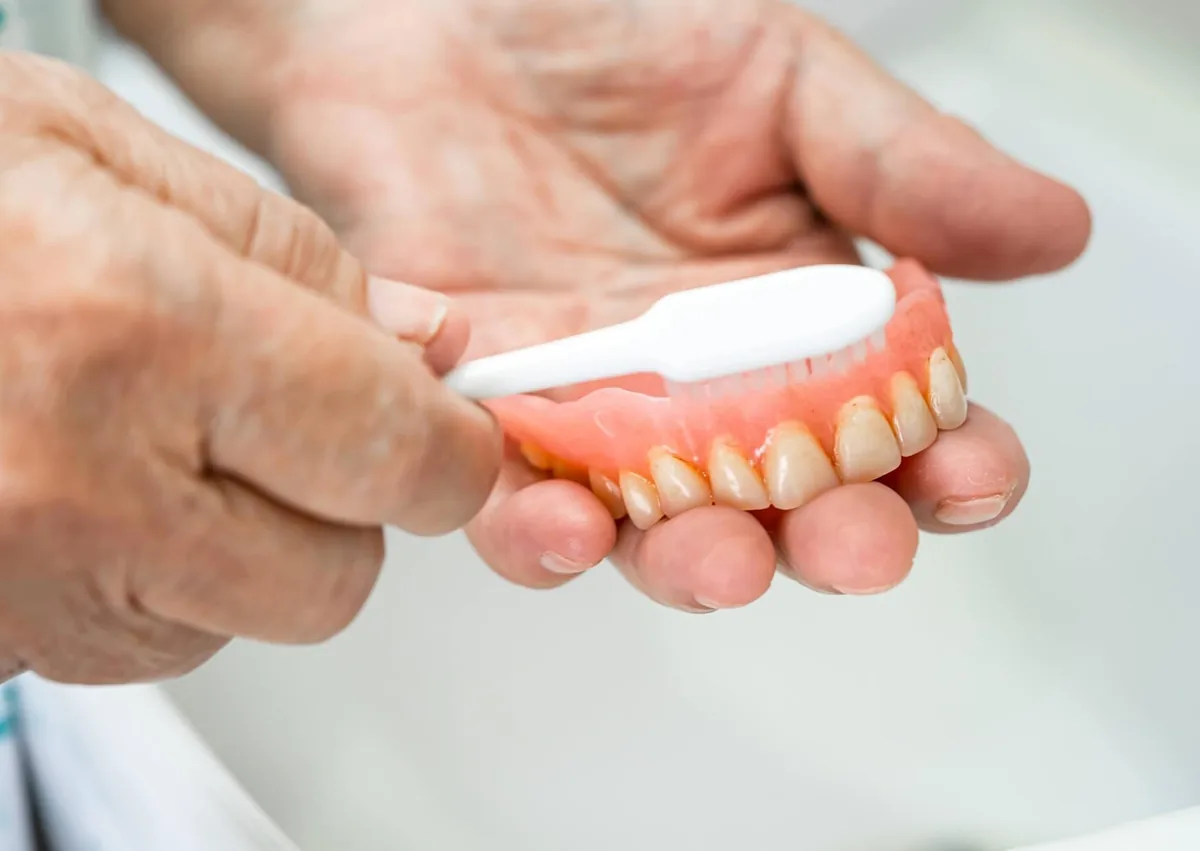
Clean removable dentures every day with a soft denture brush and a cleaner made for dentures. Unless your dentist tells you otherwise, remove them overnight and avoid hot water, which can warp the base.
Brush your gums, tongue, and any remaining teeth every day. If you have implants, clean around the attachments exactly as instructed.
Regular dental exams are still important with dentures. They help your dentist check tissue health, fit, bite, oral cancer signs, and the condition of remaining teeth or implants, and this guide to dentures health problems explains when to seek care.
Do not use household glue or try to reshape a denture yourself. Denture adhesive may help in some cases, but ongoing looseness, pain, or frequent sore spots should be evaluated professionally.
Schedule an evaluation if missing or failing teeth are affecting your ability to eat, speak, or smile comfortably. You should also be seen if a denture slips, cracks, causes recurring sores, changes your bite, or no longer feels stable.
Seek prompt care for worsening swelling, pus, fever, uncontrolled bleeding, severe pain, or trouble swallowing or breathing. Red or white patches, ulcers, lumps, or sores that last more than two weeks also need professional evaluation.
The most useful cost comparison is based on the same diagnosis, materials, and follow-up plan. A restorative consultation can show whether a partial, complete, or implant-supported denture makes the most sense for your needs.
A restorative consultation can confirm whether a partial, complete, or implant-retained solution is best and provide a personalized, itemized estimate for your care. Call University Dental Implant Center for dentures and partials in San Diego, CA, serving La Mesa and El Cajon, to book an appointment at (619) 582-4224.
Many dental plans provide partial coverage for conventional or partial dentures, but benefits vary. Review the deductible, annual maximum, waiting period, replacement limits, exclusions, and network requirements before treatment.
Usually, yes. Denture fees are commonly quoted per arch, so replacing both upper and lower teeth generally costs more than replacing one arch.
Extractions are separate procedures with their own fees. Cost may vary based on imaging, sedation, surgical difficulty, bone smoothing, grafting, and follow-up care.
Many dentures remain usable for about 5 to 10 years, but there is no guaranteed lifespan. Wear and ongoing changes in the gums and jawbone may require earlier relining, repair, or replacement.
A lower-cost denture may be reasonable if it fits well, supports a functional bite, and includes appropriate follow-up care. Compare material quality, customization, adjustment policies, and long-term support, not just the starting price.
Success stories that speak for themselves