Pain when chewing on a dental implant is not normal to ignore. Mild tenderness can happen soon after placement, but pain that continues, starts after the implant had been comfortable, or gets worse with biting can point to excess bite pressure, inflamed tissue, a loose crown, or a problem with implant stability.
Avoid chewing on that side and arrange a dental evaluation, especially if the pain is worsening or comes with swelling.
If chewing on or around an implant is painful, a focused dental implant evaluation can identify whether the issue is a high bite, loose restoration, gum infection, or implant integration problem. University Dental Implant Center in San Diego, CA provides calm, evidence-based assessment and clear treatment options to reduce pain and protect your implant restoration.
A dental implant is a titanium or ceramic post placed in the jawbone. Unlike a natural tooth, it does not have a nerve inside or a periodontal ligament to cushion force, so pain usually comes from the gum, bone, nearby teeth, or the crown and connecting parts.
The timing of the pain matters. Pain right after surgery may be part of healing, while pain that appears months or years later is more likely related to bite overload, inflammation, loose parts, or bone changes.
A dentist usually needs an exam and dental X-rays to confirm the cause. Symptoms can suggest the problem, but they cannot diagnose it on their own.
Symptom Pattern | Possible Explanation | Typical Next Step |
|---|---|---|
Tenderness soon after surgery | Normal healing or excessive early pressure | Examination if severe, worsening, or lasting longer than expected |
Pain only when biting | High bite, loose crown, or excess force | Bite and restoration check |
Redness, bleeding, or swelling | Gum inflammation or peri-implant disease | Professional cleaning and tissue assessment |
Sudden pain after months or years | Loose or damaged component, overload, or infection | Prompt implant evaluation and X-rays |
Implant or crown feels mobile | Loose restoration or loss of implant stability | Stop chewing there and seek prompt care |
An implant dental crown that touches before the rest of the bite can place too much force on the implant. This is often called a high bite, and it can cause soreness with chewing, pressure in the surrounding bone, or discomfort in nearby teeth and jaw muscles.
A dentist can check how your teeth meet in normal biting and side-to-side movement. If the crown is taking too much force, a careful adjustment may reduce the overload, though the implant still needs to be checked for stability. Research on biting forces helps explain how excess load can contribute to implant complications.
The crown connects to the implant through an abutment, often held in place with a small screw. If the crown, abutment, or screw loosens, chewing may cause pain, clicking, pressure, or visible movement.
Do not try to tighten or test it yourself. Continued chewing can damage the parts or increase stress on the implant and bone. A dentist experienced with dental crown restorations can evaluate the connection and repair or replace the restoration as needed. See dental crown replacement.
Plaque and trapped food can irritate the gum around an implant. This may cause tenderness, bleeding, swelling, or a bad taste.
Early inflammation limited to the soft tissue is called peri-implant mucositis. It may be reversible with professional care and better home cleaning.
If inflammation reaches the supporting bone, it is called peri-implantitis. This can lead to bone loss and needs timely gum disease treatment to help protect the implant. Reviews of peri-implant disease also show how common these conditions can become over time.
Osseointegration is the process of bone bonding closely to the implant surface. If healing is disrupted or the implant is loaded too early, it may stay painful under pressure or fail to become stable.
Smoking or vaping, uncontrolled diabetes, infection, limited bone support, and heavy bite forces can raise this risk. Learn more about dental implant success. If the implant itself moves in the bone, it needs prompt professional evaluation.
Pain is not always coming from the implant. A cracked nearby tooth, tooth decay, sinus inflammation, jaw-joint strain, or clenching and grinding can create pain that feels like it is centered on the implant.
That is one reason a careful exam matters. The painful area can be hard to pinpoint without testing and imaging.
Some soreness, bruising, and swelling are common during the first several days after implant placement. The discomfort should gradually improve, not become sharper or more intense, and the implant should not feel mobile.
Many implants need several months to integrate before they receive the final crown. The timeline depends on location, bone quality, and whether grafting was needed.
Follow your dentist’s instructions about food texture, cleaning, and when the implant can safely take chewing force. Also follow recommended post-implant care instructions.
In some cases, extraction and implant are done at the same visit, which can affect healing expectations.
Call the office if pain does not improve, returns after getting better, or starts after the final crown is placed. New pain with chewing after restoration is often more related to the bite or hardware than to routine surgical healing.
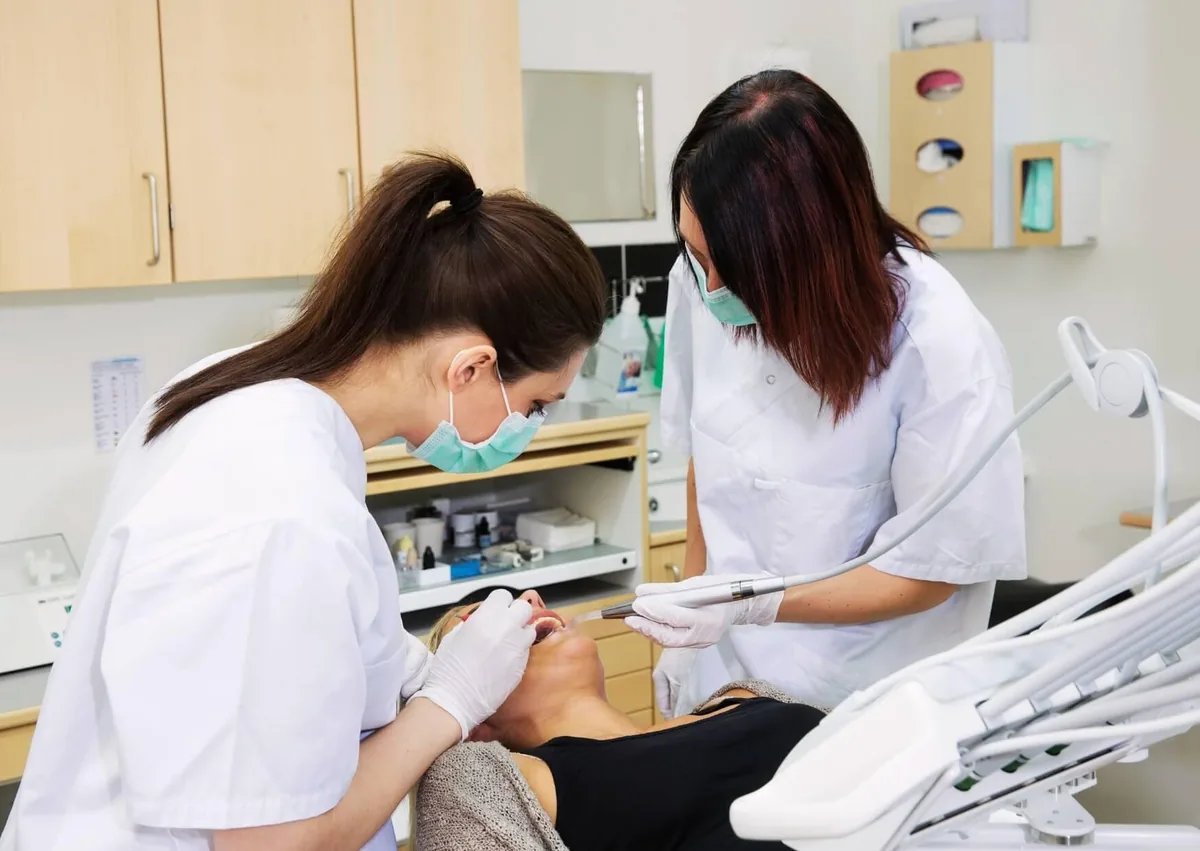
The dentist will usually ask when the pain started and whether it happens only with pressure or also at rest. They may also ask about swelling, bleeding, a bad taste, grinding, or any feeling of movement.
The exam may include checking the gums, measuring tissue pockets, testing the stability of the crown, and comparing bite contacts. Dental X-rays can help show bone levels, implant position, and changes around the implant.
In some cases, three-dimensional imaging or referral to a specialist is appropriate. A focused dental implants evaluation helps determine whether the problem is mechanical, inflammatory, or related to implant stability.
Treatment depends on the cause, not just how much it hurts. If the implant is stable and the problem is limited to the crown or bite, a bite adjustment or component repair may be enough.
If the gum is inflamed, treatment may include professional cleaning and a more specific home-care routine. If there is bone loss or implant instability, treatment may be more involved and can include surgical care.
If an implant has to be removed, replacement is not always immediate. Healing, infection control, available bone, gum condition, smoking status, diabetes control, bite forces, and the position of nearby nerves or sinuses all affect whether grafting or another implant is a good option.
If another implant is not advisable or not preferred, alternatives such as a bridge or removable partial denture may be considered. Each option differs in treatment time, maintenance, effect on nearby teeth, and long-term predictability.
Recovery may be quick after a simple bite adjustment. Inflamed tissue, bone loss, grafting, or implant replacement can extend the timeline by weeks or months.
Until the implant is evaluated, chew on the other side and avoid hard, sticky, or crunchy foods that trigger pain. Keep the area clean with the tools your dental professional recommends, but do not press on it, wiggle it, or keep testing it.
Long-term maintenance includes daily plaque removal around the implant, regular professional exams, and periodic X-rays when needed. A nightguard may help if you clench or grind, but it should be fitted only after the implant and bite have been properly assessed.
Dental implants can be a durable and stable way to replace missing teeth. They also have limits, because the crown, screw connection, gum tissue, and supporting bone can still develop problems over time.
The benefit of early evaluation is that a small issue may be easier to correct before it becomes a larger one. A bite adjustment, cleaning, or repair is often simpler than treating advanced bone loss or replacing a failed restoration.
Seek prompt dental care if the implant or crown moves, pain is getting worse, swelling is increasing, pus is present, or chewing suddenly becomes difficult. For severe, worsening pain or signs of infection, treat this as a dental emergency and get immediate attention.
Urgent evaluation is especially important if you have fever, facial swelling, rapidly spreading redness, swelling near the eye, or trouble swallowing or breathing. Breathing or swallowing difficulty warrants emergency care.
Persistent chewing pain still deserves an appointment even without those warning signs. Early assessment may prevent a minor bite or restoration problem from affecting the implant’s supporting tissues.
If pain is severe, worsening, accompanied by swelling, or the crown feels mobile, prompt evaluation is the next step to diagnose the cause and protect the implant. University Dental Implant Center focuses on dental implants in San Diego, CA; call (619) 582-4224 to schedule an urgent appointment for evaluation and treatment.
Yes. The implant has no dental pulp, but the surrounding gum, bone, nearby teeth, jaw muscles, and sinus tissues can generate pain. Loose components can also create painful pressure or movement during chewing.
Brief tenderness after surgery may improve as healing progresses. Pain during chewing that persists, worsens, appears after a symptom-free period, or occurs with movement should be evaluated rather than watched indefinitely.
Yes. Food can irritate the gum and contribute to inflammation, especially if the crown shape or spacing makes the area hard to clean. A dentist can check for trapped debris, inflammation, and restoration contours that may need correction.
Not necessarily. A high bite, inflamed gum, or loose crown can cause discomfort even when the implant remains integrated, but pain can also happen with bone loss or instability. An exam and imaging are needed to tell the difference.
It is safer to avoid chewing on that side until the cause is assessed. Continued loading can aggravate inflamed tissue or damage a loose component, while a prompt dental visit can clarify what treatment is needed.
Success stories that speak for themselves