A tooth implant usually takes three to nine months from evaluation to final crown. Some straightforward cases move faster, while cases involving extraction, bone grafting, or slower healing can take a year or longer.
Most of that timeline is healing time, not chair time. The exact schedule depends on bone quality, whether the tooth still needs removal, whether grafting is needed, and how well the gums and bone recover after surgery.
If you're deciding how to replace a missing tooth or concerned about treatment time, dental implants often preserve adjacent teeth and maintain jawbone better than alternative options. University Dental Implant Center in San Diego, CA provides clear, personalized timelines so you know what to expect.
Dental implant treatment happens in stages. The implant is a small post, usually titanium, placed in the jawbone to support a replacement tooth called a crown.
Treatment Stage | Common Timing | What Happens |
|---|---|---|
Evaluation and planning | One or more visits | Exam, health review, X-rays, and often 3D imaging |
Tooth removal, if needed | One visit | The damaged tooth is removed, sometimes with grafting |
Bone graft healing, if needed | About 3 to 6 months | New bone develops to support the implant site |
Implant placement | One visit | The implant is placed in the jaw, often under local anesthesia |
Implant integration | About 2 to 6 months | Bone bonds to the implant and stabilizes it |
Crown preparation and placement | Several weeks and a few visits | The final tooth is designed, fitted, and attached |
These are typical ranges, not guarantees. The sequence may change based on the tooth location, infection, bone volume, and the treatment approach your clinician recommends.
A missing tooth can affect chewing, speech, appearance, and bite stability. Over time, nearby teeth may drift into the space, and the jawbone in that area may shrink because it no longer receives normal chewing pressure.
An implant helps transfer chewing forces into the jaw and does not require reshaping healthy neighboring teeth. Still, an implant is only one option, and the best choice depends on your oral health, goals, and the condition of the surrounding teeth.
A conventional bridge replaces a missing tooth by using nearby teeth for support. It is often faster than implant treatment, but the supporting teeth usually need to be reshaped.
A removable partial denture can replace one or several teeth with less surgery and often a lower initial cost. It may feel less stable, may need adjustments over time, and must be removed for cleaning.
Option | Typical Treatment Pace | Main Consideration |
|---|---|---|
Dental implants | Usually several months | Preserves adjacent teeth but requires surgery and healing |
Fixed bridge | Often a few weeks | Faster, but relies on neighboring teeth |
Partial denture | Often weeks to a few months | Removable and may need adjustment as tissues change |
No replacement | No procedure | May allow bite changes or bone loss in some situations |
For patients who need more stable full-arch replacement, implant-supported dentures can be an option. Their planning and timeline differ from a single-tooth implant.
Good candidates for implants usually have healthy gums, enough bone support, and medical conditions that are reasonably well controlled. A clinical exam and imaging are needed to confirm whether an implant, bridge, or denture is the better fit.
Several factors can shorten or extend treatment. The biggest ones are extraction timing, infection, available bone, and how your body heals.
A tooth can sometimes be removed and an implant placed during the same visit. That is not appropriate for every site, especially when infection, bone damage, or soft-tissue problems reduce initial stability.
If the area needs time to recover, implant placement may be delayed for weeks or months. Learn more about extraction and implant at same time.
An implant needs enough bone in the right position. Bone loss after tooth loss, gum disease, trauma, or the location of the upper sinus may make grafting necessary. Learn whether you may need a bone graft after extraction.
A small graft may sometimes be done at the same time as implant placement. A larger graft often needs several months to heal first; for more detail, see bone grafting and dental implant.
Upper back teeth sometimes need a sinus lift, which can extend the timeline. When more bone volume is needed, bone grafting helps rebuild the jaw; for practical expectations, see dental bone graft surgery.
Smoking or vaping, uncontrolled diabetes, active gum disease, certain medications, and conditions that affect bone or immune function can delay healing or raise complication risk. These factors do not always rule out implants, but they do require careful planning.
Home care and follow-up visits also matter. In some cases, the dental team may coordinate with a physician when medical history could affect surgery or healing.
Placing one straightforward implant often takes about 30 to 90 minutes. The visit may take longer if extraction, grafting, sedation, or multiple implants are involved.
Local anesthetic is commonly used, and some patients may also be candidates for sedation. Your clinician will recommend the safest option based on the procedure and your health history.
Mild swelling, soreness, and minor bleeding are common during the first few days. Many people return to routine nonstrenuous activity within a day or two, but recovery varies.
The implant may stay below the gumline or have a small healing component attached while the bone heals around it. In selected cases, a temporary tooth can be placed the same day; same-day tooth replacement still requires months of biological healing before the final restoration is ready.
Initial gum healing often happens within one to two weeks. Full bone integration, also called osseointegration, commonly takes two to six months.
Feeling better does not mean the implant is ready for full chewing force. The implant should be checked for stability before the final crown is attached.
Once integration is confirmed, the dentist takes a scan or impression for the crown. The lab and fitting process usually takes several more weeks, especially if the bite, shape, or shade needs refinement.
An implant cannot get a cavity, but the surrounding gums and bone can still become inflamed. Plaque buildup around an implant can lead to peri-implant disease and threaten long-term support.
Brush twice a day, clean around the implant as directed, and keep regular hygiene and exam visits. Depending on the restoration design, your clinician may recommend floss, interdental brushes, or a water flosser.
Avoiding tobacco and managing teeth grinding can help protect both the implant and the crown. Even when the implant remains stable, the crown or connecting parts may eventually need maintenance or replacement.
Implants can provide a stable, natural-looking replacement without relying on adjacent teeth. They may improve chewing and help preserve bone in the treated area, and with proper care they can last many years; learn how long dental implants last.
Implant treatment also has limits. It requires surgery, healing time, ongoing maintenance, and enough bone and medical stability to support a predictable result. Possible complications include infection, failure to integrate, gum or bone loss, damage to nearby structures, and mechanical problems with the crown or connecting parts.
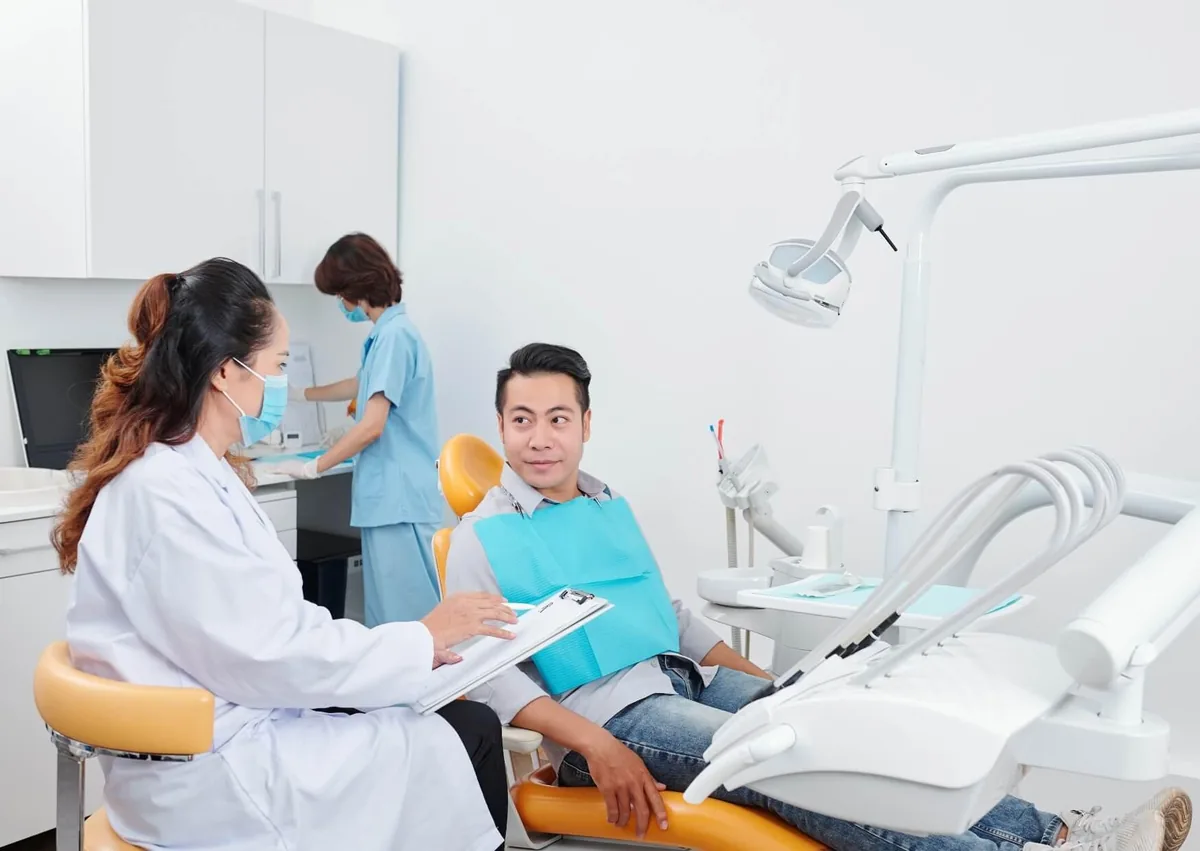
A consultation is a good next step after tooth loss, a nonrestorable tooth diagnosis, or trouble with a bridge or denture.
Seek prompt dental care for worsening swelling, severe or persistent pain, pus, fever, uncontrolled bleeding, new numbness, trouble swallowing or breathing, or an implant that feels loose.
To confirm whether an implant is right for your situation and get a realistic timeline, arrange a consultation so clinicians can review images and treatment options. Call University Dental Implant Center for dental implants in San Diego, CA at (619) 582-4224 or schedule online.
Yes, same-day placement may be possible when there is enough bone and the implant can be made stable. Significant infection, bone damage, or tissue concerns may make delayed placement safer.
Some patients can receive an implant and a temporary tooth on the same day. The final crown is usually placed only after integration is complete, so immediate treatment still involves months of healing.
Not always. A small graft may be done with implant placement, while a larger graft may need about three to six months of healing before the implant is placed.
Placement may be immediate, delayed for several weeks of soft-tissue healing, or postponed for a few months while bone heals. The condition of the socket, infection level, bone volume, and treatment plan determine the timing.
A nonintegrated implant may become loose or uncomfortable and usually needs to be removed. After healing and review of contributing factors, another implant or a different tooth replacement may still be possible.
Success stories that speak for themselves