Affordable dental implants in San Diego, CA, are possible when you compare the complete cost of treatment rather than a low advertised implant fee. A realistic estimate should include the implant, abutment, crown or denture, imaging, any preparatory care, follow-up visits, and the clinician’s experience.
Implants can replace one tooth, several teeth, or a full arch. The right option depends on your oral health, bone support, medical history, restoration goals, and budget, so an exam and imaging are needed before a dentist can give an accurate plan.
If you're weighing options for replacing missing teeth, exploring dental implants can clarify which plan balances cost and long-term function. University Dental Implant Center in San Diego, CA helps patients understand complete treatment costs and realistic timelines so they can choose a plan that fits their goals.
A missing tooth affects more than appearance. Nearby teeth can shift, chewing can become uneven, and the jawbone in that area can gradually lose volume because it no longer receives normal stimulation from a tooth root.
A dental implant is a small post, usually made of titanium, placed in the jaw to support a replacement tooth. As it heals, the bone can attach to the implant surface through osseointegration, creating a stable base for a crown, bridge, or denture.
Implants are not the only good option. When comparing implants vs. bridges, a traditional bridge or removable partial denture may make more sense when surgery is not recommended, treatment needs to move faster, or the initial cost of implants does not fit your priorities; some patients also benefit from reviewing dental implant alternatives.
The number of missing teeth has a major effect on treatment design and cost. Replacing every missing tooth with its own implant is not always necessary because several teeth can sometimes be restored with an implant-supported bridge or a full-arch prosthesis supported by fewer implants.
Treatment Option | Common Use | Main Consideration |
|---|---|---|
Single implant and crown | One missing tooth | Preserves neighboring teeth but requires enough bone and healing time |
Implant-supported bridge | Several adjacent missing teeth | May replace multiple teeth with fewer implants |
Implant-retained denture | Loose or unstable denture | Improves retention but may still be removable |
Fixed full-arch restoration | Most or all teeth in one arch | Offers a fixed solution but requires more complex planning and maintenance |
Traditional bridge | One or a few missing teeth | Faster in some cases but usually requires reshaping neighboring teeth |
Removable partial or full denture | Multiple missing teeth | Lower initial cost but less stability than implants |
A lower-cost design is not always the best value. The restoration should support your bite, allow effective cleaning, use appropriate materials, and include a realistic plan for future repairs.
Implant pricing varies because patients do not start with the same conditions or need the same type of restoration. Key cost factors include the number and location of implants, restoration type, materials, imaging, sedation when appropriate, lab work, and overall case complexity.
Some patients need preparatory treatment before implant placement. If the jaw does not have enough width or height to support an implant predictably, a dentist may recommend bone grafting; if you are wondering whether both procedures can happen together, see bone grafting and implant.
Other added costs may involve gum disease treatment, removal of a damaged tooth, or sinus augmentation in the upper back jaw. These steps can improve safety and long-term stability, but they also affect the total fee and timeline.
Ask whether a written estimate includes:
Dental insurance may help with certain parts of care, but annual maximums, waiting periods, missing-tooth clauses, and exclusions are common. Financing can make treatment easier to manage, but you should still review interest, fees, total repayment cost, and refund terms before agreeing.
Many adults with missing or nonrestorable teeth may be candidates, including some with bone loss. Healthy gums and adequate bone support improve predictability, but grafting or a modified treatment plan may expand the available options.
A dentist should review tobacco or nicotine use, diabetes control, immune conditions, prior head or neck radiation, osteoporosis treatment, teeth grinding, and medications that affect healing or bone metabolism. These risk factors do not always rule out implants, but they can change the risks, timing, or recommended approach.
Active gum disease and untreated decay usually need to be addressed first. Age alone is rarely the deciding factor; overall health, healing ability, oral hygiene, and long-term maintenance matter more.
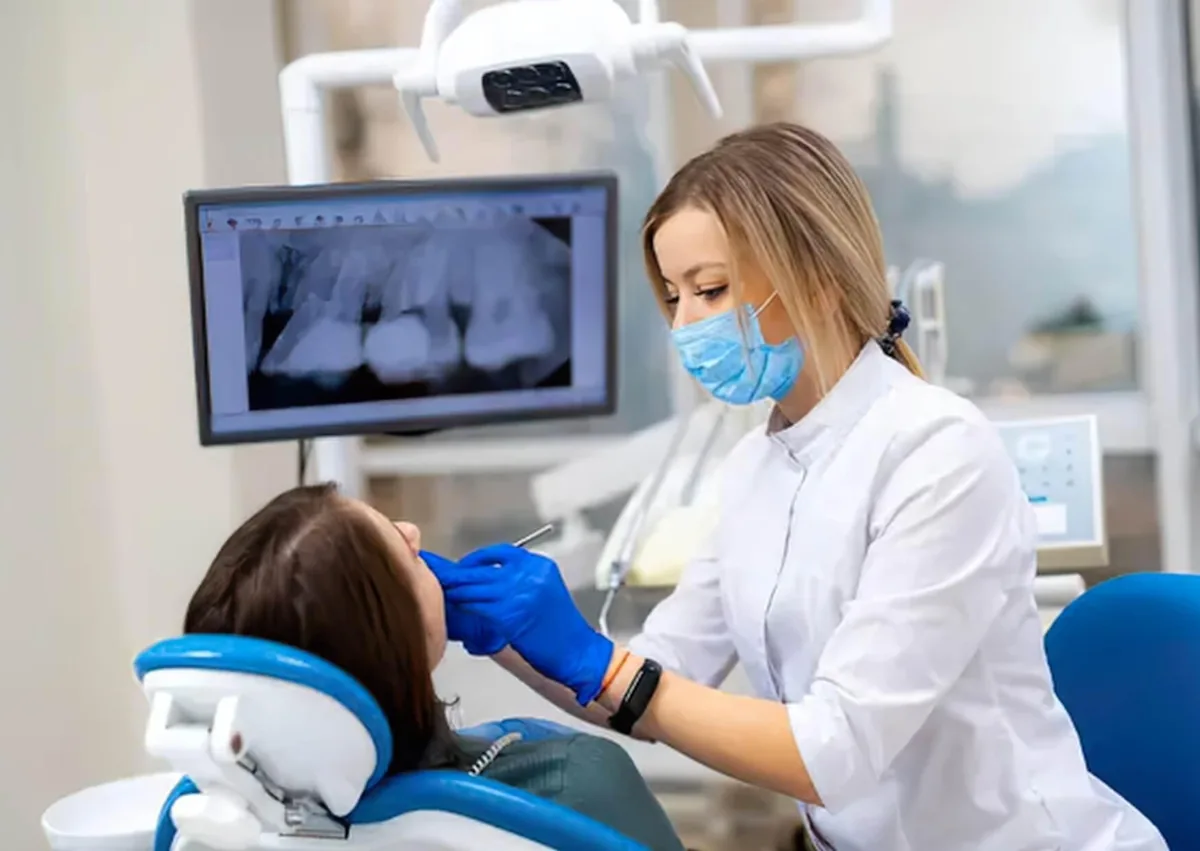
Planning usually starts with an exam, health history, bite evaluation, and imaging. A cone beam CT scan may be used to create a three-dimensional view of the bone, nerves, sinuses, and proposed implant position.
The implant is placed into the jaw under local anesthesia, and sedation may be considered when appropriate. Some patients receive a temporary tooth the same day, so anyone interested in same-day teeth replacement should ask about candidacy and the trade-offs between immediate restoration and biological healing.
Immediate loading is not right for every case. Even when a temporary tooth is placed quickly, the implant still needs time to integrate with the bone.
Osseointegration often takes several months, and added procedures can extend the timeline. Once the implant is stable, the dentist records the shape and bite needed for the final crown, bridge, or denture and then checks fit, appearance, and function.
Patients who want a general overview can review the FDA’s explanation of the implant healing process. Mild soreness, swelling, and limited bruising can happen after surgery and should gradually improve.
Call the treating office promptly if pain or swelling worsens, bleeding continues, fever develops, drainage appears, a bad taste increases, or the implant or temporary restoration feels loose. Seek urgent medical care for trouble breathing or swallowing.
Implants can provide strong chewing support, avoid relying on adjacent teeth for a conventional bridge, and improve denture stability. They can also help preserve bone near the implant, although they cannot stop every type of jawbone change.
No implant is guaranteed to last for life. Infection around an implant, bone loss, smoking or nicotine use, uncontrolled health conditions, excessive bite forces, and poor cleaning can increase the chance of failure or future repair.
Daily brushing and cleaning around and under the restoration are essential. Depending on the design, a dentist or hygienist may recommend floss threaders, interdental brushes, or a water flosser, along with professional maintenance visits based on your risk level; for more detail, read about dental implant maintenance.
Patients who clench or grind may need a nightguard. Even when the implant stays healthy, crowns, denture teeth, clips, screws, or other restorative parts can wear out and may eventually need repair or replacement.
For patients replacing most or all teeth, full-arch options that balance cost and function include fixed restorations and implant-supported dentures, which improve retention and chewing stability compared with traditional removable dentures.
Comparing consultations can be helpful when each recommendation is based on current imaging and a clear diagnosis. Ask who will perform each stage, what implant experience the clinicians have, which components and laboratory are used, and how urgent concerns are handled after surgery.
Be cautious with prices that leave out the final restoration, needed grafting, follow-up care, or anesthesia-related charges. A very low number may describe only one part of a multi-stage treatment rather than the total cost of receiving a functional tooth replacement.
A consultation makes sense when a tooth is missing, a denture feels unstable, or a damaged tooth may not be restorable. A personalized exam can show which options are clinically reasonable, how long treatment may take, and which plan offers lasting function within your budget.
To move from consultation to a personalized plan and cost estimate, schedule a visit to review imaging and options for dental implants. University Dental Implant Center focuses on dental implants in San Diego, CA; call (619) 582-4224 to book or request an appointment.
There is no reliable single price because a complete tooth replacement often includes the implant, abutment, crown, imaging, and sometimes extraction or grafting. Ask for an itemized estimate that shows the expected total and any services that could add cost.
Not necessarily. Same-day treatment often means a temporary restoration is attached at or near implant placement, while the implant still needs time to integrate with the bone.
Some plans may cover part of the surgery, crown, denture, or related procedures. Coverage depends on exclusions, annual maximums, waiting periods, network rules, and whether the insurer considers the treatment medically or dentally necessary.
Local anesthesia is used to control discomfort during placement, and temporary soreness or swelling may follow. Pain that is severe, worsening, or paired with fever, drainage, or increasing swelling should be evaluated promptly.
Implants can function for many years, but longevity depends on gum and bone health, home care, professional maintenance, nicotine use, medical factors, and bite forces. The attached crown, bridge, or denture may need repair or replacement before the implant itself does.
Success stories that speak for themselves