Dental implants can last 20 years or longer, and some remain successful for life with healthy bone, good home care, and regular professional maintenance. Published 20-year survival rates support that implants can perform well long term in appropriate patients. The visible implant crown usually needs replacement sooner, often after 10 to 15 years, because it absorbs daily biting force and normal wear.
These are average ranges, not guarantees. Implant location, bone support, gum health, tobacco use, teeth grinding, medical conditions, and oral hygiene all affect how long an implant lasts. If you are still comparing options, it may also help to review these questions before dental implant.
Dental implants can offer a predictable, long-term solution tailored to your situation. University Dental Implant Center in San Diego, CA can review your needs and explain implant longevity, treatment stages, and what to expect during healing.
A dental implant post is a small titanium or titanium-alloy fixture placed in the jawbone to replace a missing tooth root. It can support a crown, bridge, or denture without depending on a neighboring natural tooth for root support.
That matters because tooth loss affects more than appearance. Nearby teeth can drift, chewing can become less efficient, and the jawbone in the empty area can shrink over time because it no longer receives normal stimulation from a tooth root.
Tooth Replacement | Typical Longevity | Important Consideration |
|---|---|---|
Implant post | Often 20 years or longer | Requires healthy bone and ongoing maintenance |
Implant crown | Often 10 to 15 years | May wear, chip, loosen, or need replacement |
Traditional bridge | Often 5 to 15 years | Uses neighboring teeth for support |
Removable denture | Often 5 to 10 years | Fit may change as the jawbone and gums change |
Actual service life varies. A dentist can explain which option is likely to be most durable and practical for a specific area of the mouth, including implants vs. bridges.
Long-term success depends on osseointegration, which is the bond that forms between living bone and the implant surface. When that bond is stable and the surrounding gums and bone stay healthy, the implant can support a restoration for many years.
Daily plaque removal is essential because implants can develop peri-implant disease. This starts as inflammation in the gum tissue and can progress to bone loss around the implant, sometimes without obvious early symptoms.
Other factors that can shorten implant life include:
Location matters too. Back teeth usually handle greater chewing force, while front teeth may be affected more by bite patterns and habits such as biting fingernails or hard objects.
Many adults with one or more missing teeth may be candidates if they have enough healthy bones and can maintain good oral hygiene. Age alone usually does not rule someone out, although jaw growth should be complete before implant placement.
A full evaluation often includes an exam, dental imaging, a review of medical history and medications, and an assessment of the gums and bite. Three-dimensional imaging may also be used to measure bone volume and identify nearby nerves or sinus spaces.
Some patients need gum disease treatment, an extraction, or bone grafting before implant placement. These steps can add time, but they may create a stronger foundation for a predictable result. If that applies to your case, learn more about bone grafting and implant.
Implant treatment is usually completed in stages. The exact sequence depends on bone quality, the number and location of missing teeth, and whether other procedures are needed first.
Stage | Common Timing | Purpose |
|---|---|---|
Evaluation and planning | One or more visits | Assess health, bone, bite, and treatment options |
Extraction or bone grafting, if needed | Before or during placement | Prepare or rebuild the implant site |
Implant placement | Single procedure per planned site | Position the implant in the jawbone |
Osseointegration | Often 3 to 6 months | Allow bone to bond with the implant |
Final restoration | After adequate healing | Attach the crown, bridge, or denture |
Timelines vary by case. In selected situations, a temporary tooth may be placed soon after surgery, but immediate loading is not right for every patient and does not mean healing is complete. The osseointegration timeline depends on initial stability, bone quality, and healing conditions.
Mild swelling, soreness, and bruising are common after surgery and often improve within several days. Following eating, cleaning, and activity instructions is important because too much stress on the site during early healing can affect integration.
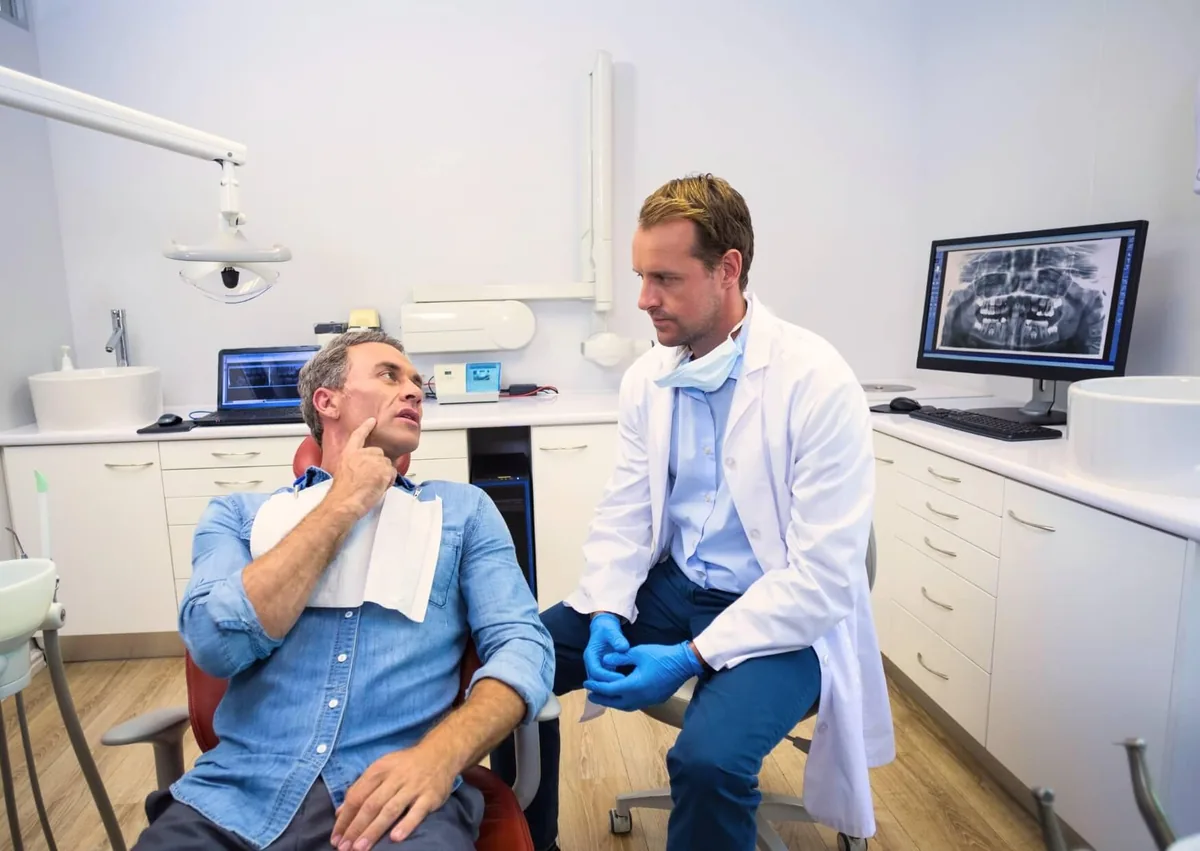
Implants do not get cavities, but the gum and bone around them still need daily care. Brush as directed, clean around the restoration with dentist-recommended tools, and follow guidance on dental implant cleaning.
Keep up with maintenance visits such as dental exams and cleanings at the interval recommended for your risk level. Regular regular dental checkups help catch inflammation, bite problems, or restoration wear before they become larger issues.
A dentist may monitor gum inflammation, pocket depths, bite forces, restoration wear, and changes in supporting bone. Early treatment of inflammation or mechanical problems can help prevent implant failure.
If you clench or grind, a professionally made night guard may help protect the restoration. Avoiding tobacco and not using your teeth to chew ice, open packages, or bite very hard objects can also reduce unnecessary stress.
Implants can provide stable chewing support, help preserve neighboring teeth, and reduce bone loss in the treated area. They can replace one tooth, several teeth, or help support a full-arch restoration depending on clinical needs.
They also have limits. Implant treatment involves surgery, healing time, cost, and lifelong maintenance.
Possible complications include infection, poor integration, gum recession, bone loss, loosening of parts, damage to the restoration, or injury to nearby structures. Careful planning lowers many of these risks, but no treatment is risk free.
An implant is not automatically the best option for every missing tooth. A bridge, removable partial denture, complete denture, or monitored space may make more sense in some cases based on anatomy, oral health, goals, and budget.
Schedule an evaluation if a tooth is missing, cannot be predictably restored, or if an existing bridge or denture no longer feels stable or comfortable. Earlier assessment may preserve more options because bone loss can continue after a tooth is removed.
An existing implant should also be checked if it feels mobile, the bite changes suddenly, or the surrounding gums bleed, swell, recede, drain, or stay painful. An implant that moves requires prompt dental evaluation, even if discomfort is mild.
Seek urgent dental care for rapidly increasing facial swelling, fever with oral swelling, uncontrolled bleeding, trouble swallowing or breathing, or severe worsening pain after a procedure. A consultation can clarify expected longevity, treatment stages, alternatives, risks, maintenance needs, and likely costs for your situation.
To explore whether implants are right for you and to get a personalized plan for long-term results, arrange an evaluation that includes imaging and a review of medical history. University Dental Implant Center focuses on dental implants in San Diego, CA; call (619) 582-4224 or request an appointment online.
Yes, the implant post can last a lifetime in some patients, but that outcome cannot be guaranteed. The crown, bridge, attachment, or denture connected to the implant is more likely to need repair or replacement over time.
Warning signs can include movement, ongoing pain, swelling, bleeding, pus, gum recession, a bad taste, or trouble chewing. Some implant problems are not painful at first, which is why regular exams and imaging are important.
An implant crown may chip, crack, wear down, loosen, or stop matching changes in nearby teeth and gum tissue. Replacing the crown does not necessarily mean the implant post in the bone has failed.
They require thorough daily cleaning, but the best tools depend on the shape of the restoration and how easy it is to reach. A dental professional may recommend floss, interdental brushes, a water flosser, or other aids and show you how to use them safely.
Coverage varies by plan, reason for replacement, waiting periods, and frequency limits. Ask for a written treatment estimate and confirm benefits directly with your insurer before treatment whenever possible.
Success stories that speak for themselves