Waking up with jaw soreness, sensitive teeth, or a dull morning headache can be a sign that your teeth are under too much pressure at night. Nightguards for teeth help reduce wear from grinding and clenching and can protect fillings, crowns, veneers, bridges, and implants.
A nightguard does not cure the reason someone grinds their teeth. It acts as a protective barrier and may reduce strain on the teeth and jaw joints while a dentist evaluates the bigger picture.
University Dental Implant Center in San Diego provides dental exams and cleanings and can help evaluate whether a nightguard is the right protective option.
Many people clench or grind during sleep without realizing it. This pattern, often called sleep bruxism, can place repeated force on enamel, the hard outer layer of the tooth, and on the muscles and joints that control jaw movement. Learn more about teeth grinding at night.
Over time, that pressure may lead to flattened teeth, small chips, cracked fillings, gumline wear, or tooth sensitivity. In some cases, it can also aggravate the temporomandibular joints, often called TMJ, which sit just in front of the ears and help the jaw open and close.
The damage is not always obvious at first. A dentist may notice early signs during an exam, such as polished wear spots, tiny fractures, or tenderness in the chewing muscles.
Several symptoms may point to nighttime grinding or clenching, but they do not confirm it by themselves. Common signs include morning jaw pain, frequent headaches, tooth sensitivity, worn edges, and broken dental work.
Some people also notice jaw clicking, tight facial muscles, or a partner hearing grinding sounds during sleep. Others have no clear symptoms and only learn about the problem during a routine dental visit or through regular dental exams.
These symptoms can overlap with other dental problems, including cavities, bite changes, sinus pressure, or joint disorders. If symptoms are persistent, worsening, or hard to explain, a dental evaluation is the safest next step. It can also help you prepare questions for your TMJ specialist if a referral is needed.
A nightguard creates a controlled surface between the upper and lower teeth. This can help limit direct tooth-on-tooth wear and may reduce stress on restorations and some jaw muscles.
It is important to keep expectations realistic. A nightguard may reduce damage and improve comfort, but it does not always stop grinding completely, and it does not treat every cause of jaw pain. Evidence on occlusal splints for TMJ-related symptoms is mixed.
That distinction matters. If pain is severe, one-sided, or linked to locking, swelling, or a sudden bite change, the problem may involve more than routine clenching and should be assessed promptly. In some cases, that means TMJ treatment.
There are two main categories: custom-made nightguards from a dentist and over-the-counter guards sold in stores or online. The difference is not just convenience. It affects fit, comfort, durability, and how the bite is managed.
A custom guard is made from impressions or a digital scan of the teeth. It is shaped to fit closely, which usually makes it more comfortable to wear and less likely to shift during sleep.
A dentist also chooses the material and thickness based on the wear pattern, jaw tension, existing crowns or implants, and whether the goal is mainly protection or muscle relief.
For patients with significant grinding, repeated dental damage, or complex restorative work, this is often the better long-term option.
Store-bought guards may help some people who want a short-term option or are still deciding whether they can tolerate wearing one at night. They are less precise, often bulkier, and may feel awkward or loose.
A poor fit can reduce comfort and may affect how the teeth come together.
That does not mean every over-the-counter guard is harmful, but persistent discomfort, gagging, uneven pressure, or a bite that feels off in the morning are good reasons to stop using it and ask a dentist for guidance.
A nightguard may be a good option for patients with signs of tooth wear, clenching, fractured dental work, or muscle tension related to sleep. It is especially helpful for people with crowns, porcelain veneers, bridges, or dental implants that need protection from excess force.
Candidacy also depends on overall oral health. Active tooth pain, untreated decay, gum infection, or a loose tooth should be evaluated before relying on a guard as the main solution.
Some patients need more than a guard alone. If the bite has changed, the jaw locks, or the teeth are wearing down quickly, a dentist may recommend a broader plan that includes imaging, bite analysis, or referral to a specialist.
The process usually starts with an exam to confirm whether grinding or clenching is likely and to rule out other causes of pain or wear. The dentist checks tooth surfaces, existing restorations, jaw muscles, and how the bite comes together.
If a custom device is recommended, impressions or a digital scan are taken and sent to a dental lab. At the delivery visit, the guard is checked for fit, retention, and balance so it protects the teeth without creating avoidable pressure points.
Minor adjustments are common. A guard should feel secure but not painfully tight, and it should not leave the bite feeling significantly altered after removal.
Most people need a short adjustment period. The first several nights may feel unusual because the mouth is sensing a new appliance, even when the fit is correct.
Mild awareness or extra saliva early on can be normal. Ongoing pain, gum irritation, worsening headaches, or a bite that feels different for hours after removal are not signs to ignore.
A well-made guard should become easier to wear with time. If it never feels stable or comfortable, the fit or design may need to be changed.
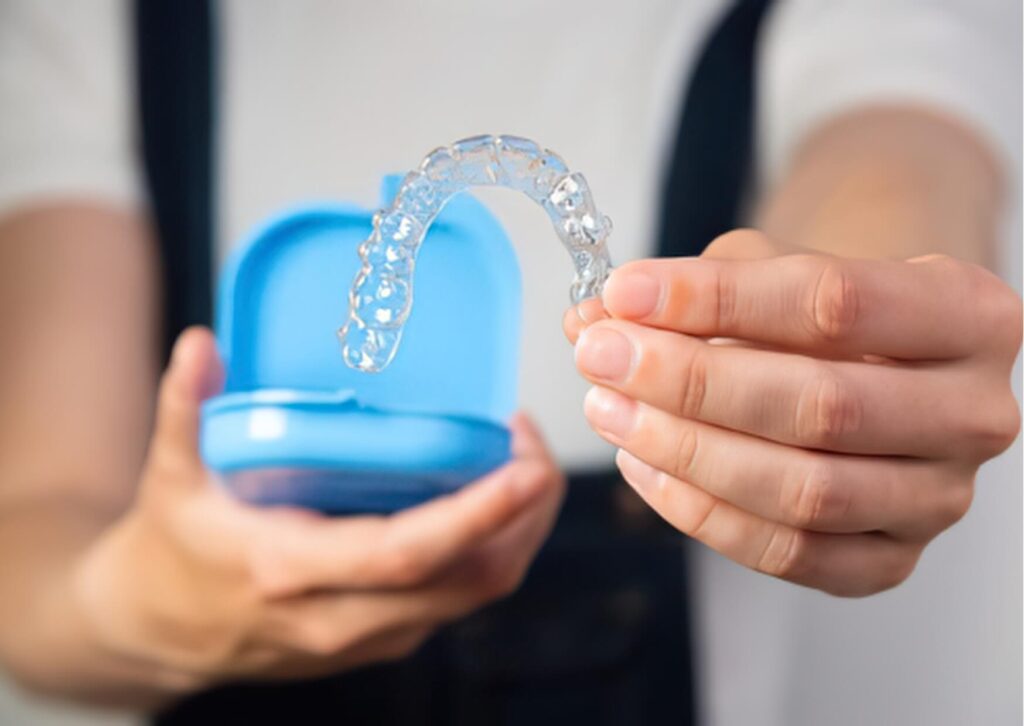
Nightguards need regular cleaning because they collect saliva, bacteria, and plaque. Rinse the guard after use and clean it with a dentist-approved method, then store it in a ventilated case so it can dry properly. Here is practical guidance on mouthguard care.
Heat can distort the material, so avoid hot water and do not leave the guard in a hot car or near a heat source. Bring it to dental visits so the dentist can check for wear, cracks, rough edges, or changes in fit.
How long a guard lasts depends on the material and the intensity of grinding. Heavy clenching can wear through even a well-made appliance over time, which is another reason periodic review matters.
The main benefit of a nightguard is protection. It can help preserve natural teeth, reduce damage to restorations, and sometimes lessen muscle strain enough to improve day-to-day comfort.
The limit is that a guard is not a full diagnosis. It does not treat every source of facial pain, and it may not solve symptoms caused by sleep disorders, joint inflammation, nerve pain, or an unstable bite.
The best results usually come from pairing the appliance with a careful exam and follow-up. In restorative dentistry, protecting the teeth matters, but understanding why the damage is happening matters just as much.
If you are noticing chipped teeth, repeated crown or filling fractures, morning jaw tension, or increasing tooth sensitivity, it is reasonable to schedule an evaluation. A dentist can determine whether a dental exam is appropriate and whether any underlying tooth, gum, or joint issue needs attention first.
If a crown is failing or becoming uncomfortable, learn more about dental crown replacement to understand your options.
Seek prompt care if pain is severe, swelling is present, the jaw locks, a tooth cracks suddenly, or your bite changes noticeably. For everyone else, a consultation is the simplest way to find out whether a custom guard would protect your teeth and fit into a broader long-term plan.
University Dental Implant Center in San Diego offers dental exams and cleanings and serves patients from La Mesa and Chula Vista; call (619) 582-4224 to schedule.
No. Sports mouthguards are made to absorb impact during athletic activity, while nightguards are designed to manage pressure from grinding and clenching during sleep.
Not always. A nightguard mainly protects the teeth and may reduce strain, but it does not necessarily stop the grinding activity itself.
For patients with significant wear, jaw symptoms, or expensive dental work to protect, a custom guard is often the more reliable option. It usually fits better, lasts longer, and can be adjusted more precisely.
Yes, over-the-counter options are available. They may work as a temporary step for some people, but if the fit is poor or symptoms continue, a dental evaluation is the safer choice.
Jaw pain that is severe, worsening, associated with swelling, locking, or a sudden bite change should be assessed promptly. Persistent symptoms without a clear cause also deserve a professional exam.
Success stories that speak for themselves