Yes, you can eat some candy with braces, but many types are risky. The biggest concerns are broken brackets, bent wires, and sugar sitting around the teeth long enough to raise the risk of cavities and white spot lesions, which are early areas of enamel damage.
Braces create more places for food and sugar to stick. Even candy that seems soft can stay around brackets and along the gumline longer than it would without orthodontic hardware.
A simple way to think about candy with braces is this: some types are lower risk, and some are much more likely to break your braces or increase decay risk. The goal is not just avoiding damage, but also keeping your teeth healthy during treatment.
University Dental Implant Center in San Diego offers braces and orthodontic care for patients managing treatment and dietary questions.
Braces work by applying steady pressure to move teeth over time. If you're wondering about other options for crooked teeth, see our braces for crooked teeth.
If a bracket comes loose or a wire bends, that pressure can change. This may slow treatment and lead to an extra repair visit.
Sugar is the second problem. Plaque bacteria feed on sugar and produce acids that weaken enamel, especially around brackets where cleaning is harder.
That is why orthodontists care not only about what kind of candy you eat, but also how often you eat it. Frequent snacking can keep your mouth acidic for longer periods.
The highest-risk choices are usually sticky and hard candies. These can damage your braces, pull off brackets, get caught under wires, or put too much force on the appliance.
Common examples include:
Sour candy can also be rough on teeth. Even if it does not break braces, the acid in sour products may increase enamel wear, especially when combined with sugar and plaque around brackets.
If you want candy during orthodontic treatment, softer options are usually less likely to break your braces. Even then, portion size and cleanup still matter.
Candy that may be easier on braces includes:
Chocolate is often the least troublesome choice because it dissolves more easily and usually does not pull on wires or brackets. It still contains sugar, so moderation and good cleaning are important.
If you eat candy and nothing feels different, clean your teeth as soon as you can. For step-by-step cleaning tips, check our braces hygiene guide.
Rinse with water first if you cannot brush right away. That can help wash away sugar and debris from around the brackets, and if you want more guidance, read about mouthwash for braces.
Pay attention to signs that something may have shifted. A loose bracket, a wire poking your cheek, or a bite that suddenly feels off can all suggest damage.
You should contact your orthodontist if you notice a broken bracket or bent wire, especially if it hurts or makes eating harder. It is also worth calling if any part of the appliance comes off completely.
Seek prompt emergency care if there is significant pain, swelling, bleeding that does not stop, or a sharp wire injuring the inside of your mouth. These problems may not be hospital emergencies, but they still need prompt attention, and if you're unsure whether to call, learn when to see an orthodontist.
One candy-related problem does not always cause a major delay. Still, repeated broken brackets or bent wires can make treatment less efficient over time.
Orthodontic movement depends on consistency. If your braces are not working as planned for days or weeks before a repair, your teeth may not move on schedule.
There is also the enamel issue. If plaque builds up around braces and causes decalcification, those chalky white marks can remain visible after treatment ends.
Most patients do better with a realistic plan than with an all-or-nothing rule. If candy will be around, choose softer options, keep the portion small, and eat it with a meal instead of snacking on it for hours.
That timing helps because saliva flow usually increases during meals. A small amount eaten once is often easier on enamel than repeated sugar exposure throughout the day.
For school events, road trips, and movie nights, brace-friendly alternatives can help. Soft chocolate, yogurt, cheese, or cut fruit are usually easier on both your braces and your teeth than chewy sweets.
A few habits can make a real difference. Choose candy that melts instead of stretches, avoid biting into hard sweets, and skip anything that clings to brackets.
Try to eat sweets in one sitting rather than nibbling throughout the day. Afterward, rinse with water and brush when you can.
Clean carefully around the edges of each bracket and near the gumline, where plaque tends to collect. If your teeth feel sensitive, your gums bleed often, or cleaning has been difficult, bring that up at your next visit.
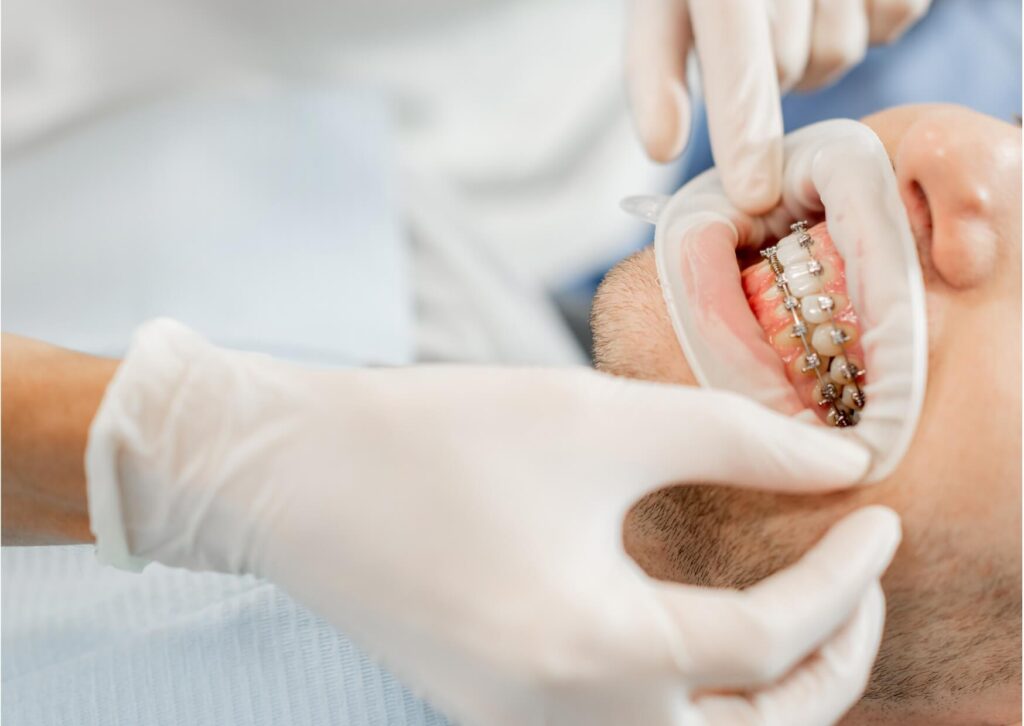
If you are not sure whether candy damaged your braces, a quick orthodontic check is often the safest choice. Small problems can be easy to miss at home, and catching them early may help you avoid a longer delay.
It is also worth scheduling a dental exam visit if you notice new sensitivity, white marks near brackets, gum swelling, or spots that trap food over and over. These signs do not always mean something serious, but they should be checked.
A short conversation with your orthodontist can make the rest of treatment easier. Clear advice on foods, cleaning, and what to avoid is often enough to prevent repeat problems and keep progress moving.
University Dental Implant Center offers braces care in San Diego and nearby La Mesa and El Cajon; call (619) 582-4224 to schedule.
Yes. A single piece of hard or sticky candy can loosen a bracket or bend a wire, especially if you bite into it with your front teeth.
Plain chocolate is usually one of the better candy choices with braces because it melts and does not tend to pull on the appliance. It still contains sugar, so eat it in moderation and clean your teeth well afterward.
In most cases, yes. Gummies are more likely to stick around brackets and wires, which raises both breakage risk and cavity risk.
Rinse with water and brush gently when you can. If something stays trapped, a wire feels out of place, or the area becomes painful, contact your orthodontist.
Your teeth are often more tender after an adjustment, so chewy or hard candy may be even more uncomfortable then. Softer foods are usually easier during that time.
Success stories that speak for themselves